 Start here
4 Things That Make ArNS A Different Type of Domain
Discover four key features that make ArNS domains fundamentally different from traditional domain systems: permanence, flexible naming, programmability, and decentralized incentives.
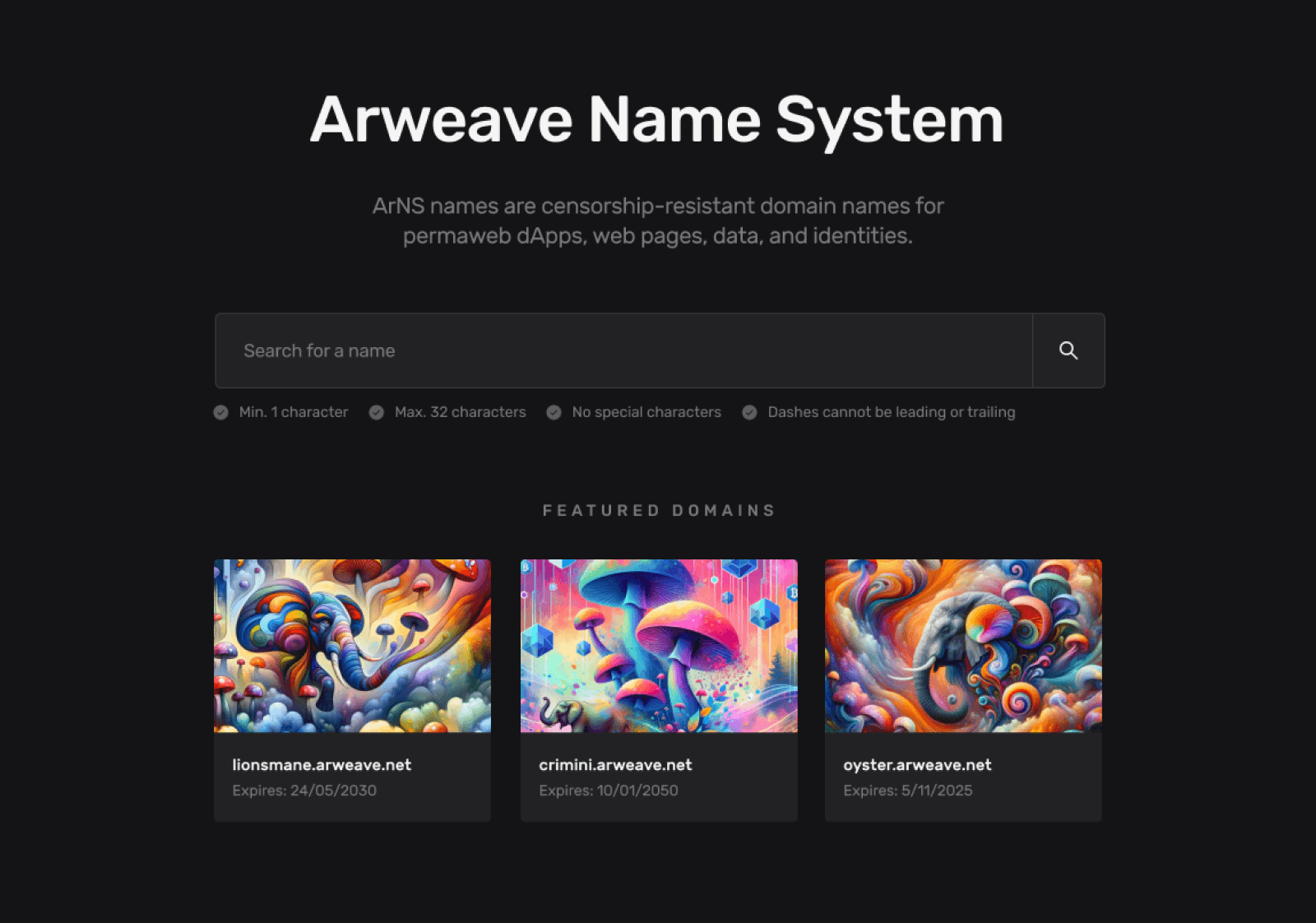
There are a lot of naming systems out there. Most of them are either temporary, tied to centralized services, or designed for specific blockchains. ArNS is built differently. It is designed for permanence, flexibility, interoperability, and real usability.
Here are four things that set it apart:
1. Permanence by Design
When you register an ArNS name, it is not going anywhere. The name is permanently stored on Arweave.
And even better, you can choose to permabuy the name so it is yours forever. You pay once, and that ownership is locked in, not just for now or next year, but forever.
This makes ArNS reliable for use cases where it actually matters that data sticks around: apps, identities, projects, and content that people may need access to years (or decades) from now.
2. "Dot-Nothing" and "Dot-Everything" Naming
ArNS supports a unique naming structure that is more flexible than traditional domains.
You can register names that work across the familiar http:// protocol with the dot-everything structure that uses the top-level domain from 400+ ar.io gateways, or the dot-nothing method from the Arweave ar:// protocol.
For example, you can register a simple ArNS name like ardrive, and use it with:
- Dot Nothing:
ar://ardriveusing Wayfinder - Dot Everything:
https://ardrive.ar.io,http://ardrive.permagate.io, or any of hundreds of gateways
That means ArNS names work everywhere without dependency on a single domain extension.
3. Programmable and Hierarchical Domains
These are not just vanity names. ArNS supports unlimited undernames (e.g. logo_ardrive.ar.io) and allows domain owners to program logic directly into the name using smart contracts on the Solana-based ar.io protocol. That means you can automate what your domain does or how it interacts with apps.
If you are a developer, it is not just a name. It is part of your app architecture and workflow.
If you are not, it is still easy to plug in hosting, links, or other features in a way that works across any interface using the ar.io gateway layer.
4. Decentralized Incentive Model
Naming systems such as DNS (think .com) are centralized platforms monetized by global organizations like ICANN. Projects like ENS send fees to a DAO governed by the interests of a few.
ArNS flips that.
ArNS registration fees are paid in $ARIO and go straight back into the ecosystem, supporting gateway operators, developers, and the underlying infrastructure that makes the network run.
Revenue generated from ArNS registrations directly supports the ar.io network, incentivizing gateway operators and sustaining decentralized infrastructure.
ArNS is about contributing to a system that rewards participation, stays decentralized, and grows without gatekeepers.